How we pot at Orquiverde
How we pot at Orquiverde
Three elements that make all the difference
Our setup
Outdoor patio - screened - full rain + natural sunlight
See-through roots - easy bugs checks - strong, happy plants
How We Pot Our Orchids at Orquiverde
If you've ever wondered why our plants look so healthy and root so beautifully, a big part of the answer is in how we pot them. Here's our simple, honest method — the same one we use for every plant that leaves our collection.
Our growing conditions
All our orchids grow outside, on our patio, covered only by a screen. They receive natural rain, natural sunlight, and real air circulation every day. That's the foundation. Everything else we do is built around letting the outdoors do its job.
The containers: plastic net pots
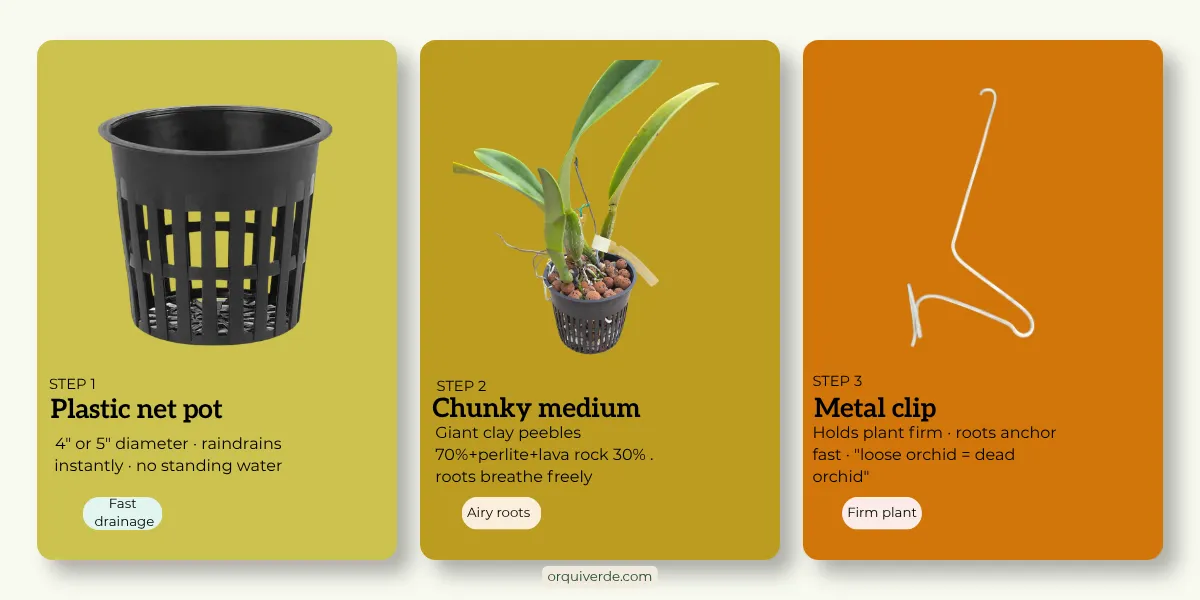
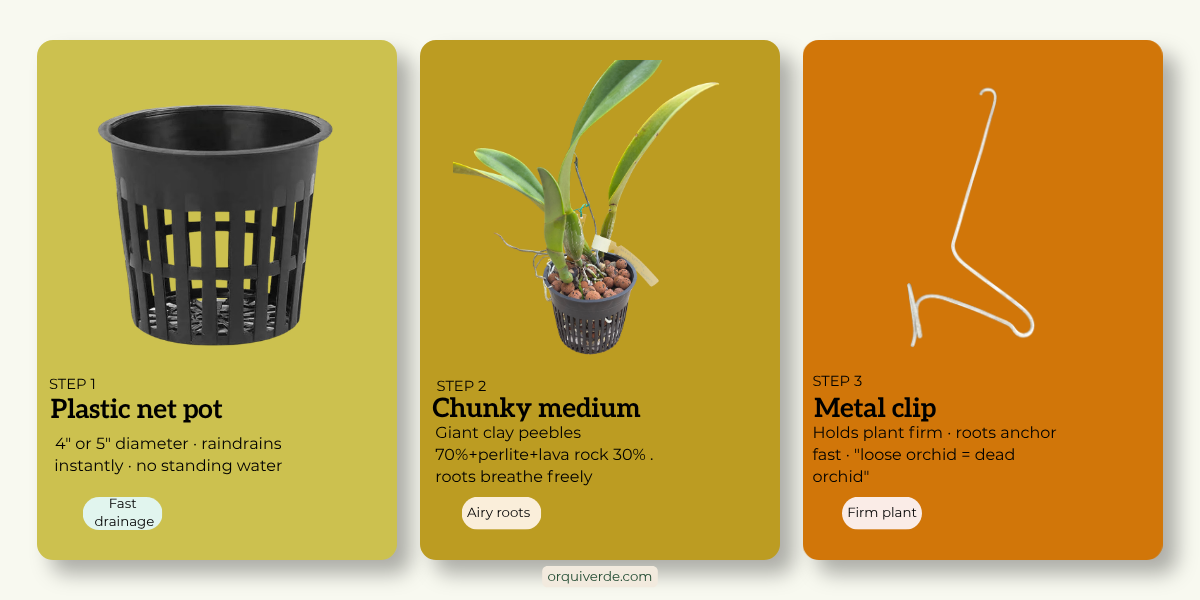
We use plastic net pots, mostly 4" and 5" diameter. The reason is simple: they drain fast. When rain falls — and in Florida it falls hard — the water flows right through the pot and doesn't sit around the roots. Standing water is one of the fastest ways to lose an orchid. Net pots make that risk almost disappear.
For some of our Brazilian Cattleya species, we use small clay pots instead. Clay breathes differently and suits certain plants better.
The medium: chunky and open
Inside the pot, we use a mix that prioritizes drainage and airflow:
About 70% giant clay pebbles
About 30% large perlite and lava rock
This combination keeps the roots airy, lets water pass through quickly, and dries out between waterings — which is exactly what Cattleya orchids need. In the summer months, when rain doesn't come as often, we do water more frequently. But the medium makes sure we're never drowning the roots.
The secret that makes it all work: the clip
This is the one most people overlook. Every plant is secured to its pot with a metal clip. We call it a fix-and-tutor clip, and its job is simple: hold the plant absolutely still while it establishes its roots.
There's a saying we believe completely: "Loose orchid, dead orchid."
When a plant wiggles and moves, the new roots can't anchor properly. They break before they catch. A steady, secure plant roots fast, grows strong, and is far less stressed.
What this setup gives us
Because the pots are open and the medium is chunky, we can see the roots at all times. We can check for rot, spot bugs early, and watch the roots grow — which is honestly one of our favorite parts. Healthy roots are one of the best signs of a happy plant, and with this method, you can see them working.
This is the same care we give every plant before it leaves our collection and goes to yours.
— Maria, Orquiverde 🌿